
Compare Jay County Property Values
Indiana assesses property at a 100 percent ratio under a market value-in-use standard. Even so, an assessed value is not a promise. It will not tell you what a parcel sells for. Jay County assessment records, deed records, and tax records each hold different facts. So match every number to its source before you lean on it.
| Value | What It Is | Where |
|---|---|---|
| Assessed value | Value set under market value-in-use rules | Assessor roll |
| Market value | Likely value under the Indiana standard, not a guaranteed price | Assessment method |
| Last sale price | Consideration from one past transfer when available | Deed or transfer record |
| Land and improvement | Separate components when the parcel card displays them | Assessor detail |
A Jay County tax bill starts from gross assessed value. It may apply deductions to reach a net figure. The bill is a calculation record, not a fresh opinion of market worth. A sale price, meanwhile, can be stale, non-arm's-length, or missing from the public result entirely. Treat each number as what it is.
Jay County Assessment Standard
The Indiana DLGF assessment overview explains market value-in-use. It also covers the annual trending that flows from sales data. A ratio study then compares assessed value against sale price. A statewide 100 percent ratio does not oblige any single parcel's assessment to match its next closing price.
Mass assessment applies common methods across many parcels at once. A licensed appraisal studies one specific property for a stated date and purpose. Keep those two products distinct when comparing any Jay County property value.
Condition, use, and the date of the evidence all shape what a figure means. A number stripped of its year and source makes weak comparison data. That holds even when it came straight from an official record.
Find a Jay County Property Value
Jay County offers search routes through Schneider and Beacon. Exact modes include Search all, Search by name, Search by address, Search by parcel ID, and Search by alternate ID. The platform displays an ASV column in its results. Field-level details on an individual parcel card may vary.
- Search the situs address in Schneider or Beacon. Remove the direction or street type if needed.
- Copy the parcel and alternate ID, ASV, and assessment year shown.
- Ask the Assessor for the current parcel card when land, improvement, or deduction detail is unclear.
- Check the Recorder's deed only for the separate transfer fact and legal description.
- Assessed value
- The value assigned under Indiana assessment rules.
- Market value-in-use
- The Indiana standard based on a property's use in its market.
- Assessment ratio
- Assessed value divided by sale price in ratio studies.
- Consideration
- The value stated for a transfer when the deed record supplies it.
- Reassessment
- A scheduled review that may include physical inspection.
The Schneider/qPublic search is the platform route captured for Jay County.
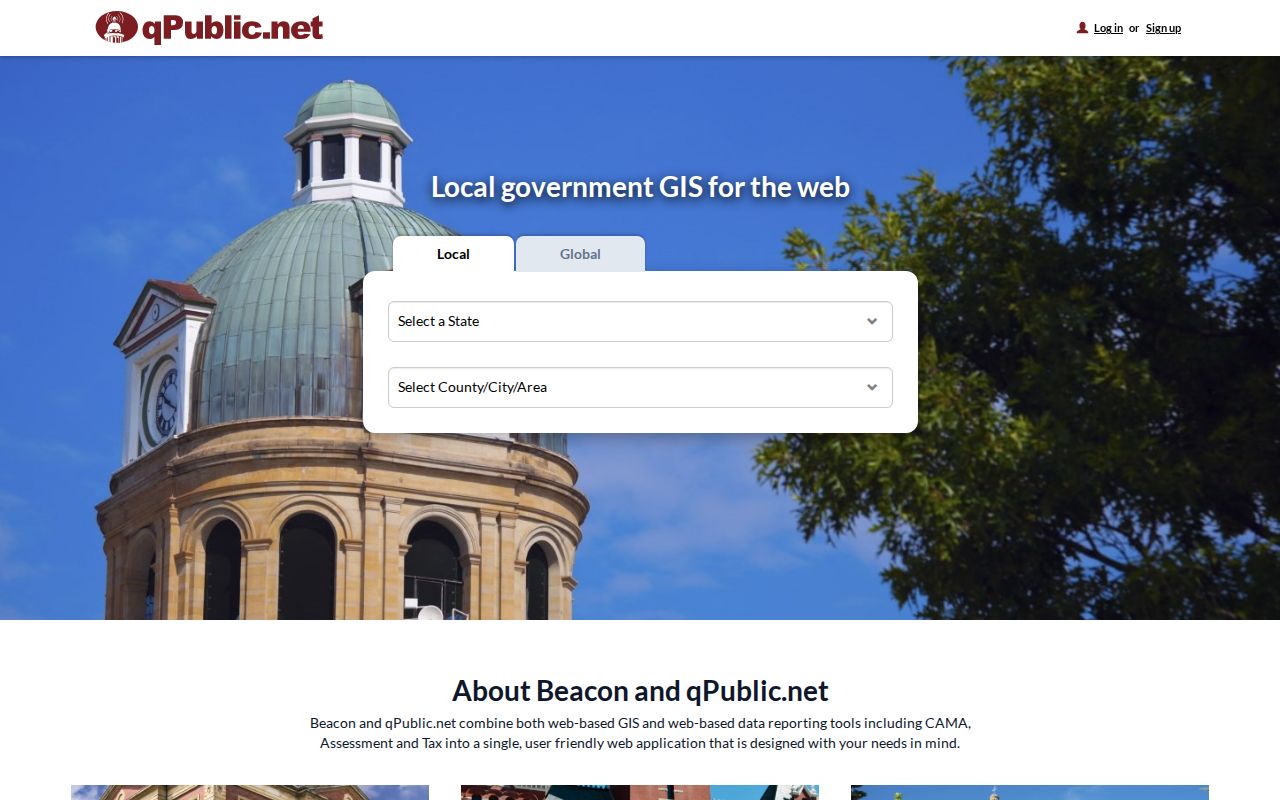
The displayed ASV works best as an assessment record rather than a final number. Treat anything uncertain or very recent with caution, and confirm it directly with the Jay County Assessor.
Annual Jay County Value Trending
Between full physical reviews, the Assessor relies on annual trending to keep assessments current. Sales evidence drives those adjustments. That means a value can shift even when nothing was built on the parcel. The key question is which assessment date and tax year the record reflects.
Compare matching years and similar property uses. A nearby sale can shape the trend without proving what the subject parcel is worth. When a record leaves the change unexplained, call the Assessor at 260-726-4456 and ask how the current figure was produced.
Jay County's 2026 Reassessment Cycle
The DLGF cyclical reassessment page starts a new four-year cycle on July 1, 2026 for 2026 pay 2027 taxes. Assessors physically inspect about one quarter of parcels each year. Jay County has not published which city or neighborhood will be inspected first.
A neighbor's inspection does not prove that the subject parcel is in the same group. This is a timely reason to record the assessment year and call the Assessor rather than infer a schedule.
Jay County Sale Price Evidence
A recorded deed can carry a transfer date, the parties, a legal description, and a recording reference. Not every Jay Doxpop result shows consideration or a sales-disclosure reference. The Auditor's published $20 disclosure fee confirms a transfer workflow exists. It does not guarantee online access to every sale price.
Some sales come with family terms, multiple parcels, or personal property folded in. Those details can make a single sale a weak stand-alone estimate. Weigh any sale against the assessment date. Check the property's condition before treating the price as market evidence.
Deductions Change Jay County Taxable Value
Deductions work differently than many owners expect. They lower net assessed value while leaving gross assessed value untouched, and the gross figure is the one that best reflects the assessment itself. Two nearly identical homes in Jay County can carry different tax bills for this reason alone. The Auditor administers the deduction and transfer bridge between the two figures.
Questions about bill mechanics, penalties, exemptions, or appeals belong on the Jay County property tax records page. Value research ends at what the numbers mean and where the county records them.
Confirm Jay County Value Records
The Assessor's office handles parcel-card questions directly. Call 260-726-4456. The office sits on the courthouse first floor. If the portal skips an assessment year or a value split, request that specific public record by parcel number. Don't ask for a broad owner file.
The statewide DLGF assessed-value search offers Details and Download options. It also suggests retrying partial street or name entries. A focused APRA request can reach a nonconfidential county value record that is not posted online. It remains subject to statutory exemptions and reasonable production time.
Keep the downloaded row, the parcel ID, the assessment year, and the retrieval date. Jay County trending and reassessment cycles change displayed values. Those details keep later comparisons honest.
Limits of Jay County Property Value
An assessed value in Jay County is not a promise of a sale price. The assessor's figure may rest on a different date. It may also rest on a mass-appraisal method or facts that have shifted since the last appraisal was filed. A past sale price carries the opposite problem. It captures one finished deal rather than what a buyer might pay today.
For questions tied to a transaction or a boundary improvement, seek qualified professional advice. Verify the parcel description from the deed records as well. Note: Keep the source date beside any Jay County property value used in a comparison.
Assessment is not an appraisal. A Jay County assessed value supports taxation; it does not guarantee a sale price or replace a parcel-specific appraisal.